
Plenary Panels
The WIL Australia Conference 2026 will feature two connected headline morning panels designed to act as intellectual anchors for the conference.
Across two mornings, the panels will move from the lived experience of students and emerging professionals to the policy, funding and system-level decisions required to support the future of work-integrated learning.
Together, the panels move from lived experience to system-level action, supporting the conference theme: WIL for Impact: Partnering for Scalable Practice.
DAY 1 – MONDAY 19 OCTOBER
Future Talent: What Students Want, What Graduates Expect
This session will create space for candid discussion about the current WIL experience. Students, recent graduates and early-career professionals will reflect on what is working, where expectations and reality diverge, and what needs to change.
The insights emerging from this session will provide direct provocations for the second-day discussion.
PANELLISTS

Flinders University, Master of Teaching (Secondary), CPP 2025 & 2026

Adelaide University, Bachelor of Software Engineering (Honours), Degree Apprenticeship

Amy Holton
Charles Darwin University, Masters in Occupational Therapy

Adelaide University, 2nd Year Student, Bachelor of Podiatry (Honours)
DAY 2 – TUESDAY 20 OCTOBER
Funding the Future: Australia’s Next Big Investment in WIL
Building on the insights raised on Day 1, this panel will bring together policy, government, industry and sector leaders to consider where the next sustained investment in WIL may come from—and what conditions will shape it.
PANELLISTS:

Professor Katrina Falkner
Pro Vice Chancellor Learning and Teaching, Adelaide University

Callan Markwick
Executive Director Workforce Population & Migration, SA Department of State Development

Brett Hall
General Manager – Policy, Research & Projects, Australian Industry Group Centre for Education and Training

Assistant Director, Initial Registration, Tertiary Education Quality and Standards Agency
FACILITATORS:

Dean of Student Experience and Employability, Griffith University
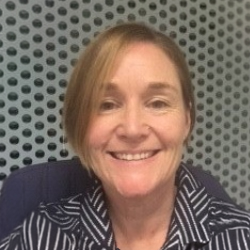
Manager WIL Academic Programs, Swinburne University of Technology
Professor Katrina Falkner
Professor Falkner is Pro Vice Chancellor Learning and Teaching for Adelaide University, driving innovation in Adelaide University’s curriculum and advancing the university’s learning and teaching experience. Formerly Executive Dean of the Faculty of Sciences, Engineering and Technology at the University of Adelaide and Head of School of the School of Computer Science at the University of Adelaide, Professor Falkner has served as President of the Australian Council of Deans of ICT and Chair of the Australasian Chapter of the Special Interest Group for Computer Science Education. She has extensive industry consultation experience with organisations such as DST Group, Google, and the Commonwealth Department of Education. Professor Falkner is also the leader of the national CSER Digital Technologies Education Program, which supports Australian teachers, particularly focusing on young women, low-SES, and Indigenous populations.
Callan Markwick
Callan is the Executive Director, Workforce Population and Migration (WPM), responsible for building a highly skilled workforce in South Australia through targeted policy and investments in workforce capability and attracting global talent to strengthen the state’s economic and social standing. Callan has over 20 years’ experience in leadership roles in both public and private sector, and in-depth knowledge and expertise in local and national training and education systems, workforce planning and strategy, and public sector policy and delivery. Callan holds a Graduate Certificate of Leadership from Deakin University along with tertiary qualifications in project management, human resources, training and career development.
Brett Hall
Brett Hall is General Manager – Policy, Research and Projects in Australian Industry Group’s Centre for Education and Training. The Centre works with and for industry to drive bold new thinking on education and training in the context of work.
Brett has more than 15 years’ experience shaping and implementing workforce, skills and labour market policies and programs aligned to industry needs across national, statewide and local contexts. Prior to joining the Centre, Brett worked in a range of public sector leadership roles across both state and federal governments.
Louise Jarvis
Louise Jarvis is an Assistant Director at the Tertiary Education Quality and Standards Agency (TEQSA), Australia’s independent national regulator for higher education.
In her role, Louise leads regulatory assessment teams working with prospective providers who are seeking initial registration and initial course accreditation in the sector.
She is an experienced regulator, with more than 15 years in public sector regulation. Louise has a wealth of experience in regulatory assessments, particularly in public health and the prevention of harm. This is a matter important to providers and students and relevant to work integrated learning as both an opportunity and risk.
At TEQSA, Louise has been involved in regulatory assessments with a focus on work integrated learning, bringing a regulatory perspective to discussions about Work Integrated Learning, assurance of quality and learning outcomes.
Paul Fitzgerald
Paul Fitzgerald is a Special Education Teacher at Mark Oliphant College B–12 in South Australia, working with Years 7–10 students to provide appropriately challenging and personalised learning experiences for young people with additional needs.
Prior to moving into school education in Australia, Paul was Lead Lecturer for Sport at Buckinghamshire College in the UK from 2021 to 2024. In this vocational further education setting, he taught sport programs while having responsibility for curriculum design, assessment and liaising with internal and external stakeholders.
Paul holds a BA (Hons) in Sport and Physical Education from Buckinghamshire New University, a Postgraduate Diploma in Education and a Master of Teaching (Secondary) from Flinders University. Before entering education as a mature-age university student, Paul enjoyed a career in rugby. His own transition from sport into tertiary study and subsequently into education has shaped his interest in the pathways through which people develop skills and transition between education, training and employment.
Jiya Sargun
Jiya Sargun is a second-year Bachelor of Software Engineering (Honours) student at Adelaide University and a degree apprentice with BAE Systems Australia. Through the degree apprenticeship program, she has the opportunity to balance university study with hands-on industry experience, working on real-world technology and data-focused projects. She enjoys applying her classroom knowledge within a professional environment while continuously developing her technical, communication and workplace skills.
Amy Holton
Amy is a mature, final year Master of Occupational Therapy student currently completing her capstone placement. Her previous work integrated learning experience includes a 5 week remote clinical placement in Alice Springs for which she received a university scholarship.
Sakura Lim
Sakura is a 2nd year student returning to university after seeking a career change from Veterinary Nursing. She discovered a great passion for Podiatry that aligned deeply with her values of advocating and caring for others. When not studying, she gets to apply her years of previous clinical experience in the High Risk Podiatry setting as an Allied Health Assistant for CAHLN, a sector very dear to her heart. Her favorite part of her role is building rapport with her patients and learning in what she likes to consider her version of paid placements.
Additionally, she is also a competitive athlete, having previously represented Australia in the World Dodgeball Championships in Canada and often competing in other international tournaments.